After 25 years and over 30,000 clients — Japanese, Chinese, Korean, Thai, Vietnamese, Filipino, Indian, European, American, African, and mixed heritage — I’ve noticed patterns that no textbook teaches. This is a collection of honest observations from that experience, specifically about what foreigners in Japan find different, difficult, or surprising about their hair here.
- Observation 1: Tokyo Does Something Real to Foreign Hair
- Observation 2: Most Clients Try to Solve It With Products. Products Are Not Enough.
- Observation 3: Foreign Clients Often Accept Worse Results Than They Should
- Observation 4: The Clients With the Best Results Have One Thing in Common
- Observation 5: Japanese Straightening Has Changed Completely in 20 Years
- If You Are Struggling With Your Hair in Japan
Observation 1: Tokyo Does Something Real to Foreign Hair
This isn’t perception. It’s measurable. Japan’s humidity — especially during the rainy season (June–July) and summer (July–September) — creates atmospheric moisture levels that genuinely exceed what most clients have experienced in their home countries. Hair that managed fine in London, Singapore, New York, or Bangkok can behave completely differently in Tokyo.
The physics: hair is hygroscopic, meaning it absorbs water molecules from the surrounding air. At 85–90% relative humidity, the rate of moisture absorption by the hair is dramatically higher than at 50–60%. The cuticle — the outer protective layer — swells unevenly. Strands that absorb at different rates create texture conflict. The result is frizz, puffiness, loss of shape, and unpredictable behavior that resists styling.
This is not a hair problem. It’s a physics problem. And physics problems have engineering solutions.
Observation 2: Most Clients Try to Solve It With Products. Products Are Not Enough.
Almost every foreign client who contacts me has already spent significant money on anti-frizz products. Serums, sprays, masks, oils. Some help temporarily. None solve the problem structurally.
The reason: most anti-frizz products work by coating the hair surface with silicone or similar film-forming agents. This provides temporary smoothness — but in Tokyo’s humidity, the atmospheric moisture pressure on that coating is simply higher than the products are designed to withstand. Additionally, silicone coatings build up over time, making the cuticle more porous and reactive — which makes the humidity problem worse, not better.
The clients whose hair improves most dramatically are the ones who switch to silicone-free products and pair that with either a structural treatment (straightening) or a genuinely superior drying technique. Both things together produce noticeably better results than either alone.
Observation 3: Foreign Clients Often Accept Worse Results Than They Should
This one I feel strongly about. Many foreign clients, aware of the language barrier and not wanting to seem difficult, leave a salon appointment with a result they’re not happy with and don’t say anything. They assume the problem is their hair, or the gap in expectations is just a cultural difference they have to accept.
Sometimes the result was genuinely the best that stylist could offer for that hair type. But sometimes — often — the result was the product of a stylist applying techniques developed for Japanese hair to hair that needed something different. These are not the same situation, and they have different solutions.
My strong recommendation: send a photo before booking. Any stylist who works regularly with foreign clients will welcome this. Their response to your photo — the questions they ask, the specificity of what they say — tells you more about their actual experience with your hair type than anything else.
Observation 4: The Clients With the Best Results Have One Thing in Common
After 25 years, I can say with confidence: the clients whose hair looks best consistently are not the ones with the “best” hair. They’re the ones who are consistent with their aftercare.
Specifically: silicone-free shampoo, heat protection oil before every blowdry, and never air drying. These three habits, applied consistently, produce hair quality that accumulates over time. Clients who do this see their hair improving month over month, not just holding steady.
The clients whose results degrade fastest are typically the ones who use silicone-heavy products (even expensive ones), wash with hot water, and air dry because it’s convenient. These three habits, combined, undo the benefit of even excellent salon work within weeks.
Observation 5: Japanese Straightening Has Changed Completely in 20 Years
The reputation that follows Japanese straightening — stiff, plastic, artificial — belongs to the 1990s and early 2000s. Alkaline formulas at high pH produced exactly those results. Modern acid-based straightening at pH 4–6 is a fundamentally different treatment. The result is soft, natural-looking, and — when done by a skilled stylist — undetectable as a chemical treatment.
I’ve had clients come to me specifically to “fix” straightening done at other salons that made their hair look obviously processed. In most cases, the problem was either alkaline formula, incorrect iron technique, or product application to already-treated hair. Correct technique with acid-based chemistry produces results that look like naturally straight hair — because the hair is actually restructured to behave that way, not just coated.
If You Are Struggling With Your Hair in Japan
The most useful thing I can offer before any appointment is an honest assessment of what’s actually happening with your hair and what will realistically help. Send me a photo — your hair in natural light, dry and unstyled — and describe what you’re experiencing. I’ll tell you what I think, and what I’d recommend, without any obligation to book.
If you are struggling with frizzy or unmanageable hair in Tokyo,
feel free to send me a photo on Instagram before booking.
I’ll give you an honest assessment — not a sales pitch.
📍 Ginza / Yokohama · English available · One-on-one private salon · 25 years · 30,000+ clients
🕙 Yokohama: Mondays & 1st/3rd Thursdays · Tokyo (Ginza): Tue–Sun + 2nd & 4th Thursday · 8:30–18:30
📚 Related Articles
English-speaking stylist · Ginza & Yokohama
Need a hair straightening specialist in Tokyo?
I help foreigners with curly, wavy, frizzy and color-treated hair — consultation in English. Send a photo for an honest quote, no fee.
Book on WhatsApp → Services & pricing →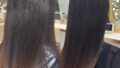
コメント