※本記事にはアフィリエイトリンクが含まれます。Amazonのアソシエイトとして、当サイトは適格販売により収入を得ています。 / As an Amazon Associate, I earn from qualifying purchases.
You moved to Japan from France. Your hair, which managed fine in Paris or Lyon, has started behaving differently in Tokyo — especially from June onwards. Here’s what’s happening and what helps.
Why Tokyo Hits French Hair Hard
France’s climate — even in the more humid parts — doesn’t prepare hair for Tokyo’s sustained summer humidity of 80–90%. French hair types tend toward fine to medium texture with natural wave, which amplifies significantly in high atmospheric moisture. Products and routines that worked perfectly in Paris often fail within 20 minutes of stepping outside during Tokyo’s rainy season. Why Tokyo humidity is different →
Common French Hair Types in Tokyo
- Fine, wavy hair — very common, and one of the hair types most affected by Tokyo’s humidity. Loses shape and volume quickly in moisture-heavy air.
- Color-treated hair — France has a strong culture of hair coloring. Bleached or highlighted sections are more porous and more reactive to humidity.
- Naturally curly — amplifies significantly in Tokyo’s summer conditions.
The Voltage Question: Your French Dryer in Japan
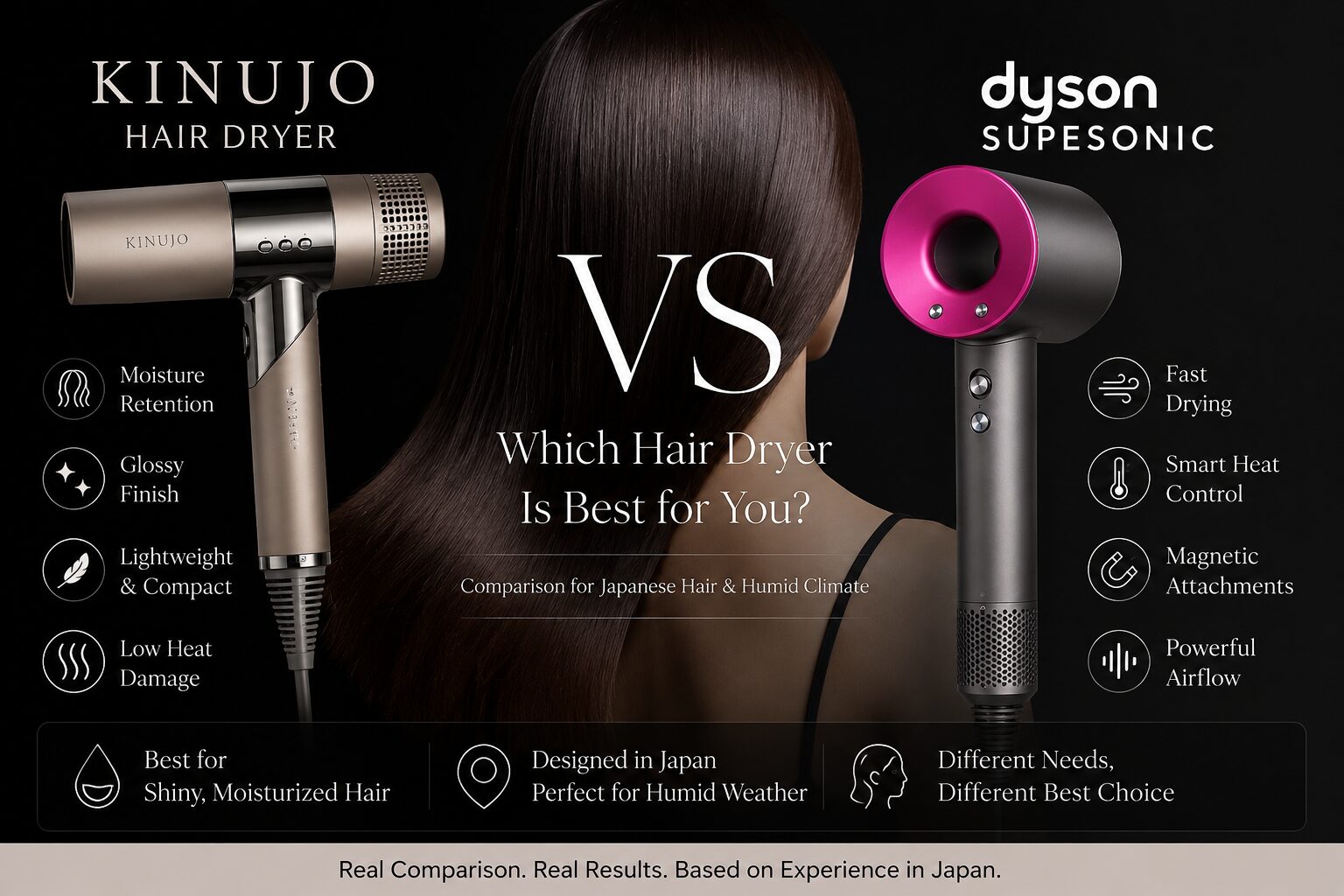
France uses 230V; Japan uses 100V. Your French hair dryer will not work in Japan without a converter — and even with a converter, performance is compromised. For stays over 6 months, a Japan-compatible dryer makes a real practical difference. For French expats who return home regularly, Dyson’s dual-voltage Supersonic (100–240V) is the only premium dryer that works equally in both countries. Best hair dryers in Japan 2026 →
Japanese Hair Straightening for French Clients
For French expats staying 1+ years with wavy or frizzy hair, Japanese acid straightening is worth serious consideration. Modern acid-based straightening produces soft, natural results — not the stiff look of older alkaline treatments — and provides genuine structural humidity resistance that surface products cannot match. Most clients reduce their morning routine from 35–50 minutes to under 15. Complete guide →
Products That Work
The most impactful switch for most French clients: silicone-free shampoo. Many European shampoos contain heavier silicones that build up faster in Tokyo’s humidity, making frizz progressively worse. Switching to a Japanese silicone-free formula improves results over 4–6 weeks of consistent use.
MOST RECOMMENDED SWITCH
SBCP Raw Mineral Shampoo
Silicone-free · reduces humidity frizz · Japan-formulated
DAILY SALON USE — PRE-BLOWDRY
Kérastase Huile Chronologiste
Non-silicone · 230°C · enhances shine · the “black bottle”
If you are struggling with frizzy hair in Tokyo,
feel free to send me a photo on Instagram before booking.
📍 Ginza / Yokohama · English · One-on-one · 25 years
🕙 Opening Hours: 8:30 AM – 6:30 PM · Appointments from 8:00 AM may be available upon request · Ginza: Tue–Sun · Yokohama: See Current Schedule →
コメント