※本記事にはアフィリエイトリンクが含まれます。Amazonのアソシエイトとして、当サイトは適格販売により収入を得ています。 / As an Amazon Associate, I earn from qualifying purchases.
Your hair didn’t used to be this frizzy. Then you moved to Japan, and now it is. Or maybe it was always frizzy, but Japan made it dramatically worse. Either way, this guide covers exactly why it happens — and what the options are, in order of effectiveness.
Why Japan Makes Hair Frizzy
Hair is hygroscopic — it absorbs water molecules from the surrounding air. In Japan’s rainy season (June–July) and summer (July–September), the air contains dramatically more moisture than most countries. At 80–90% relative humidity, hair absorbs atmospheric moisture rapidly and unevenly. Individual strands swell in different directions. The cuticle — the outer protective layer — lifts and separates. The result is frizz, puffiness, and loss of shape that products struggle to control. Full explanation →
Solutions, Ranked by Effectiveness
🥇 Japanese Acid Straightening — Most Effective
The only approach that addresses frizz at the structural level. Modern acid-based straightening (縮毛矯正) chemically restructures the bonds inside the hair shaft, making the hair fundamentally less reactive to atmospheric moisture. Not a coating. Not temporary. The humidity resistance is built in. Most clients reduce their morning routine from 40–50 minutes to under 15, and describe the rainy season as a completely different experience. Complete guide →
🥈 Silicone-Free Shampoo Switch
Most international shampoos contain silicone that builds up on the hair shaft over weeks. This buildup makes the cuticle progressively more porous and reactive to humidity — a compounding problem. Switching to silicone-free shampoo removes existing buildup and improves humidity resistance over 4–6 weeks of consistent use. Not a dramatic fix, but a foundational one that makes everything else work better.
SBCP Raw Mineral Shampoo
Best silicone-free switch · removes buildup · Japan-formulated
🥉 Better Blowdrying Technique
The technique changes that make the most difference: always blowdry (never air dry), concentrate airflow downward along the hair shaft, use a cool shot at the end to lock the cuticle in the smoothed position. Apply a non-silicone oil to mid-lengths before starting. These changes alone can extend frizz-free time from 20 minutes to several hours.
Premium Hair Dryer
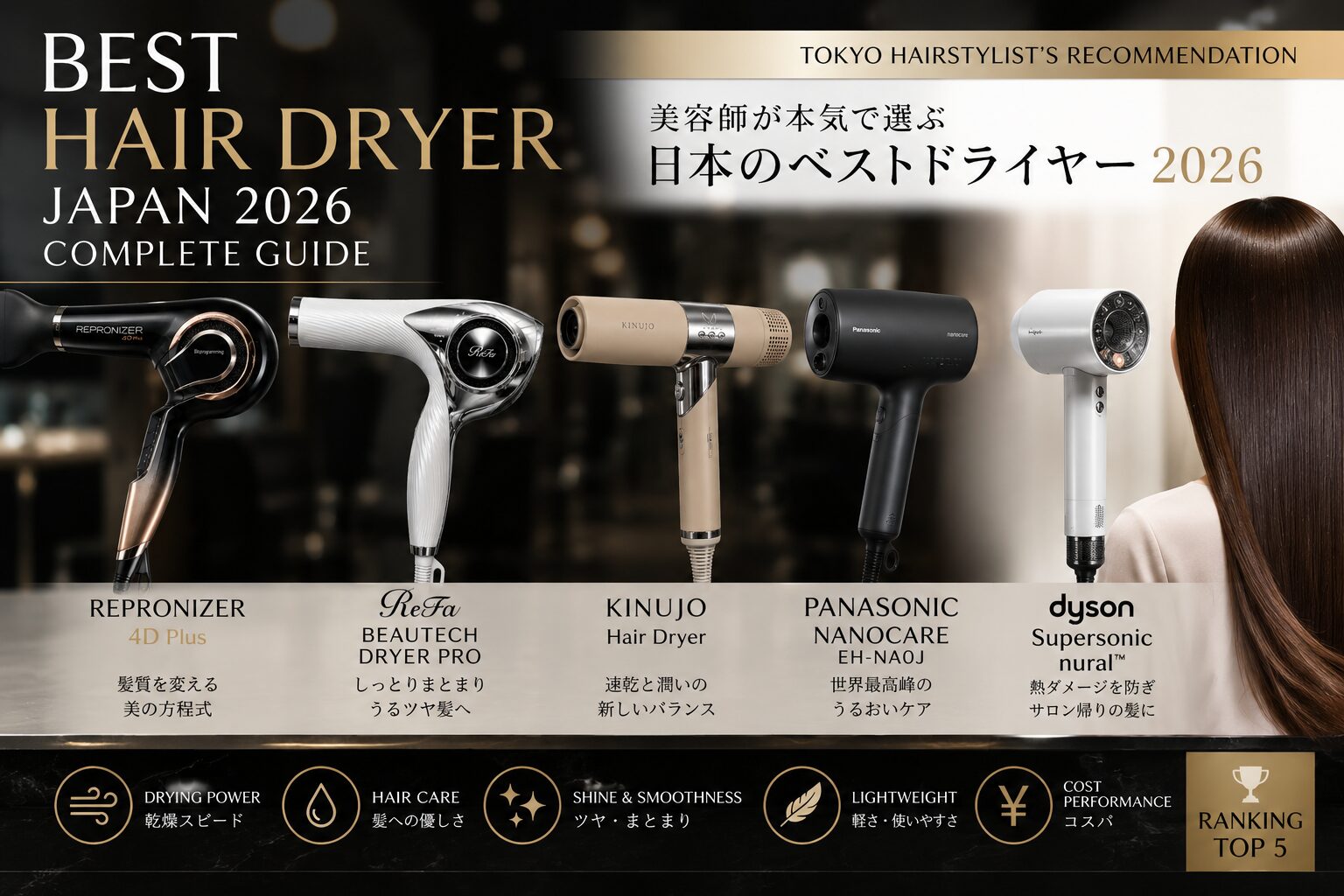
Japan has some of the world’s best hair dryers. A premium model with consistent, controlled heat produces measurably better results on humidity-affected hair than standard dryers. Best hair dryers in Japan 2026 →
What Doesn’t Work (And Why)
- Silicone anti-frizz serums — provide surface smoothing that Tokyo’s humidity overwhelms within minutes. Build up over time, making the problem worse.
- Keratin treatments — provide temporary coating that fades within 2–4 months, faster in high humidity. Not structural.
- More styling time — doesn’t change what happens when you step outside.
If you are struggling with frizzy hair in Japan,
feel free to send me a photo on Instagram before booking.
I’ll tell you honestly which approach makes sense for your specific hair. No commitment required.
📍 Ginza / Yokohama · English · One-on-one · 25 years
🕙 Yokohama: Mondays & 1st/3rd Thursdays · Tokyo (Ginza): Tue–Sun + 2nd & 4th Thursday · 8:30–18:30
English-speaking stylist · Ginza & Yokohama
Need a hair straightening specialist in Tokyo?
I help foreigners with curly, wavy, frizzy and color-treated hair — consultation in English. Send a photo for an honest quote, no fee.
Book on WhatsApp → Services & pricing →
コメント